
Onions are a staple in kitchens worldwide, adding flavor and depth to various dishes. These humble vegetables have been a staple in our diets for centuries, but have you ever wondered whether they’re truly vegetables? Is onion a vegetable?
¿Por qué algunas personas confunden las cebollas con frutas? ¿De dónde vienen las semillas de cebolla? ¿Son tubérculos? ¿Y qué hace que las cebollas sean saludables o potencialmente riesgosas?
Let’s find out together!
Is Onion a Vegetablе?
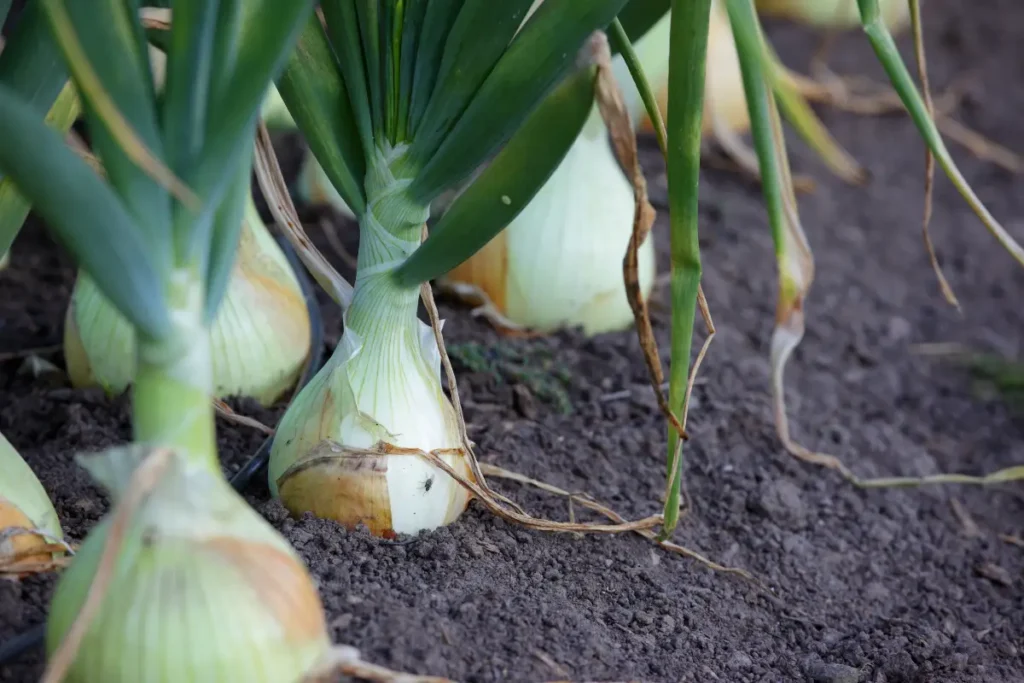
Sí, la cebolla es una verdura. Pertenece a la familia Allium, que incluye el ajo, el puerro, el cebollino, la cebolleta y la chalota. Si bien a menudo asociamos las verduras con verduras de hojas verdes o productos coloridos, las cebollas son únicas.
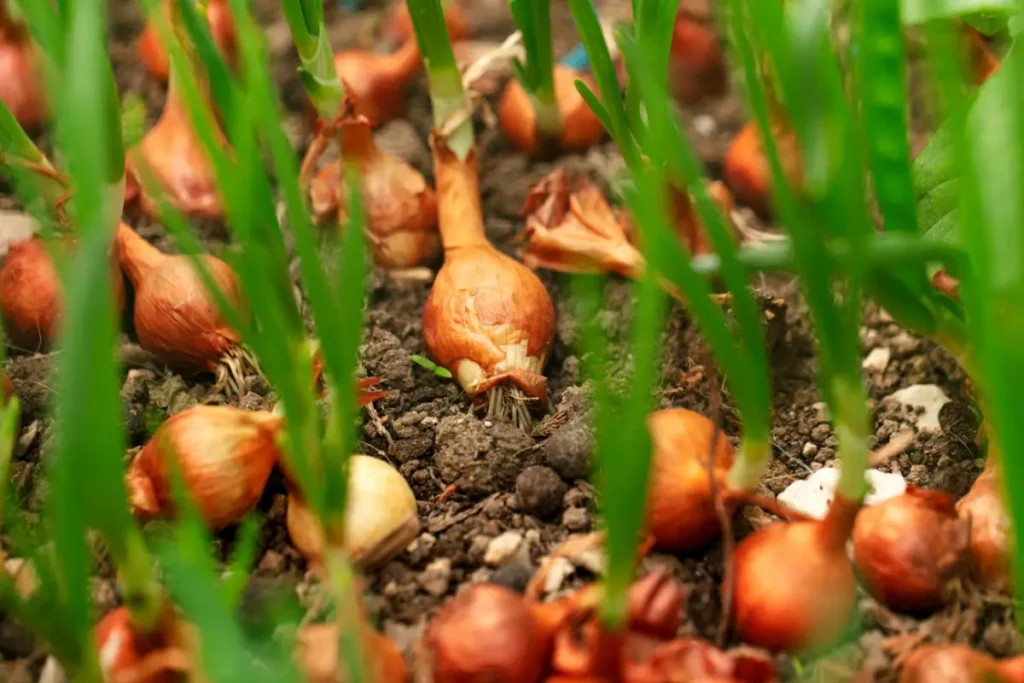
Crecen bajo tierra y contienen capas, lo que los diferencia de los tipos de vegetales más reconocibles como las zanahorias.
Both onions and carrots have edible parts that grow underground, but what we consume differs. With carrots, the part we eat is the actual root, which is the long, orange portion that’s underground.
On the other hand, with onions, what we eat isn’t the root; it’s the bulb, which is formed from the stem and grows underground.
Entonces, si bien ambos crecen bajo tierra, las partes comestibles son distintas.
Las zanahorias son verdaderos tubérculos, ya que comemos sus raíces, mientras que las cebollas son vegetales de tallo bulboso porque la parte comestible proviene del tallo, no de la raíz.
Onions are considered vegetables because we use them in cooking. Whether in salads, soups, or other dishes, they’re important to many recipes.
¿Por qué la gente confunde las cebollas con frutas?
A veces la gente se confunde con las cebollas debido a su sabor. Algunas cebollas, como las dulces Vidalia o Walla Walla, pueden ser sorprendentemente dulces y el dulzor suele estar relacionado con las frutas. Entonces, cuando las cebollas tienen un sabor dulce, la gente puede pensar que podrían ser frutas.
Fruits are usually sweet and come from a plant’s flowering part. Onions, though, grow underground and don’t come from a plant’s flowers.
They have a more savory taste. So, the confusion happens because sweet onions can taste a bit like fruits, even though they’re technically vegetables.
It’s like a little trick that taste can play on our minds, but don’t worry, onions are vegetables, not fruits.
¿De dónde vienen las semillas de cebolla?
Onion seeds come from the plant’s flowering head, called a “scape.” This part grows on top of the onion plant, reaching up into the air. When the onion plant blossoms, it forms tiny, black seeds in clusters. These seeds are like little packages of potential.
They carry the instructions to grow new onions when they’re planted.
Some onions, especially the sweet varieties, can’t make good seeds for growing new plants. So, in those situations, people use a different way to make new onion plants. They take a big onion and carefully divide it into smaller pieces.
These smaller pieces can then be planted to grow new onion plants. It’s like making copies of the original onion plant, so you have more onions to grow and eat.
Semillas de cebolla recomendadas
| Imagen | Título | Principal | Comprar |
|---|---|---|---|
 | Vidalia Sweet Onion Seeds Orgánico Sin OGM 110/170 Días Primavera/Otoño Jardín rsc2a1r (más de 200 semillas) | Principal | Consultar mi precio en Amazon |
Arriba | Semillas de cebolla para plantar: 8 variedades de día largo y corto Cebollas amarillas, rojas, blancas, dulces y verdes para verano, otoño, semillas de cebolla de Gardeners Basics | PrincipalElegible | Consultar mi precio en Amazon |
 | Juegos mixtos de cebolla roja, blanca y amarilla 8 oz | Bulbos cultivados naturalmente sin OGM - Surtido de cebollas fáciles de cultivar | Principal | Consultar mi precio en Amazon |
 | Sow Right Seeds - Semillas de cebolla criolla roja para plantar - Paquete de reliquia sin OGM con instrucciones para plantar un huerto casero - Cultivar cebollas moradas clásicas, esenciales para cocinar | PrincipalElegible | Consultar mi precio en Amazon |
 | Semillas de cebolla española dulce amarilla para plantar, más de 750 semillas tradicionales por paquete, (Isla's Garden Seeds), semillas sin OGM, nombre botánico: Allium cepa, gran regalo para el jardín del hogar | PrincipalElegible | Consultar mi precio en Amazon |
 | Más de 600 semillas de cebolla morada para plantar | PrincipalElegible | Consultar mi precio en Amazon |
 | Semillas de cebolla española dulce Walla Walla para plantar, más de 300 semillas por paquete, (Isla's Garden Seeds), semillas sin OGM, nombre botánico: Allium cepa, gran regalo para el jardín del hogar | PrincipalElegible | Consultar mi precio en Amazon |
 | yunakesa 400 Semillas de cebolla dulce de Maui CDN Día corto Plantación de primavera / otoño Fácil | Principal | Consultar mi precio en Amazon |
¿Las cebollas son vegetales de raíz?
No, onions aren’t considered root vegetables, and this might seem a little puzzling because they do grow underground. To clarify, root vegetables are plants that store their nutrients and energy in their roots. These include well-known vegetables like carrots and potatoes. However, onions do things a bit differently.
Onions are special because the part we eat isn’t the root; it’s actually a part of the stem that grows beneath the soil.
When we slice open an onion, we can see all the layers inside, and those layers are the edible parts. In contrast, root vegetables store their nutrients in the part below the soil’s surface, such as a carrot’s orange root.
So, even though onions share the characteristic of growing underground with root vegetables, they’re technically bulbous stem vegetables because the part we eat comes from the stem, not the root.
¿Es la cebolla una verdura saludable?
Onions aren’t only delicious but also bastante saludable. They’re low in calories and packed with essential nutrients. Here’s a list of key health benefits associated with onions:
1. Rico en antioxidantes
Las cebollas contienen antioxidantes, como la quercetina, que puede ayudar a proteger las células del daño causado por los radicales libres.
2. Salud del corazón
Las cebollas se han relacionado con un riesgo reducido de enfermedades cardíacas al ayudar a reducir la presión arterial y mejorar los niveles de colesterol.
3. Salud Digestiva
Las cebollas son una buena fuente de fibra dietética, que puede ayudar a mantener el sistema digestivo funcionando sin problemas. La fibra ayuda a defecar con regularidad y puede prevenir el estreñimiento.
4. Prevención del cáncer
Ciertos compuestos de las cebollas pueden tener propiedades para combatir el cáncer, aunque se necesita más investigación.
5. Apoyo inmunológico
Las cebollas contienen vitamina C, conocida por su papel de apoyo al sistema inmunológico. Incluir cebollas en su dieta puede ayudar a su cuerpo a defenderse de enfermedades y mantenerse más saludable.
6. Salud ósea
Onions also provide small amounts of calcium, a mineral essential for strong bones. While they aren’t a primary source of calcium, every bit helps maintain bone health.
7. Propiedades antiinflamatorias
Algunos compuestos de las cebollas se han relacionado con la reducción de la inflamación en el cuerpo. La inflamación crónica se asocia con diversos problemas de salud, por lo que agregar cebollas a su dieta puede ayudar a combatir este problema.
8. Efectos antibacterianos
Las cebollas contienen propiedades antibacterianas naturales que pueden ayudar a combatir las bacterias dañinas del cuerpo. Esto puede contribuir a la salud y el bienestar general.
9. Piel sana
Las vitaminas y antioxidantes de las cebollas también pueden beneficiar tu piel. Pueden ayudar a mantener su piel con un aspecto saludable y vibrante.
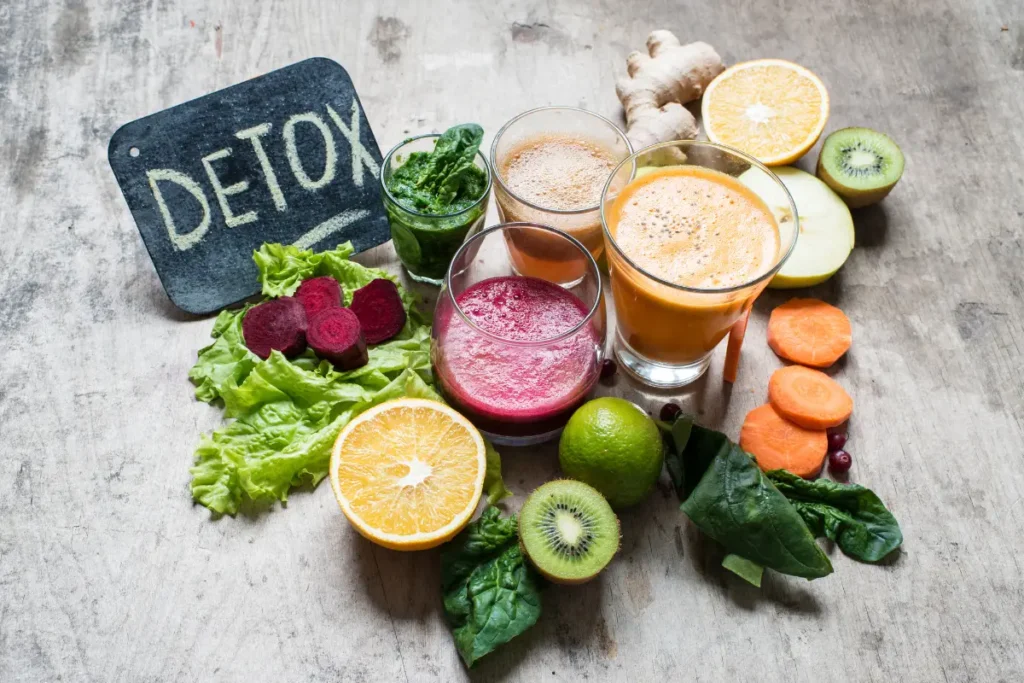
10. Desintoxicación natural
Onions contain sulfur compounds that support the body’s natural detoxification processes. This helps the body eliminate harmful substances and stay clean and healthy.
Incluir cebollas en su dieta puede proporcionar estos beneficios adicionales, convirtiéndolas en una adición aún más valiosa a sus comidas.
Riesgos asociados con las cebollas
Si bien las cebollas ofrecen muchos beneficios para la salud, existen algunos riesgos potenciales a considerar. Para algunas personas, consumir cebollas crudas puede provocar molestias digestivas, como gases e hinchazón.
Además, algunas personas pueden ser alérgicas a las cebollas y experimentar síntomas como picazón, hinchazón o dificultad para respirar cuando entran en contacto con ellas.
preguntas relacionadas
¿Por qué picar cebollas provoca lágrimas?
Cuando se pica o rebana una cebolla, se libera un compuesto volátil llamado sin-propanetial-S-óxido. Este compuesto puede irritar los ojos y estimular la producción de lágrimas. Para reducir las lágrimas, puedes intentar enfriar la cebolla antes de cortarla, usar un cuchillo afilado o cortarla con agua corriente para minimizar la liberación de este gas irritante.
¿Es la cebolla una verdura o una raíz?
An onion is a vegetable, so it’s not a root. When we think of root vegetables, examples like carrots or potatoes come to mind. Onions, however, are a bit unique. They’re considered bulbous stem vegetables because we eat the part that grows underground, which is the bulb.
So, while they share some similarities with root vegetables regarding where we find them in the ground, they’re technically a different kind of vegetable.
¿La cebolla es una fruta sí o no?
Onion isn’t a fruit; it’s a vegetable. This can be a bit confusing because some onions, especially the sweet varieties like Vidalia or Walla Walla, can have a somewhat sweet taste. But what sets fruits apart is that they’re often sweet and come from the flowering part of a plant.
Las cebollas crecen bajo tierra y su sabor es sabroso, lo que las convierte en verduras.
¿La cebolla es una verdura o una ensalada?
Onions are indeed vegetables. However, they’re often used in salads. Their crisp texture and unique flavor can add a refreshing and zesty element to salads. So, even though they’re vegetables, they frequently appear in various salads to enhance taste and crunch.
¿La cebolla y el tomate son vegetales?
Tomatoes are technically fruits because they develop from the flowering part of the plant and contain seeds. However, in culinary terms, they’re often treated as vegetables due to their savory flavor. They’re used in various savory dishes and salads, which can lead to some confusion.
Las cebollas son verduras, por lo que cuando pensamos en el dúo tomate-cebolla en la cocina, una es una fruta (tomate) y la otra es una verdura (cebolla).
¿La cebolla es una verdura o una hierba?
Las cebollas son inequívocamente vegetales, no hierbas. Las hierbas suelen ser plantas, como la albahaca o el orégano, que se utilizan para dar sabor o adornar platos. La cebolla es un ingrediente fundamental en la cocina y suele servir como base de diversos platos, contribuyendo a su sabor. Por lo tanto, pertenecen a la categoría de verduras y no a la de hierbas.
Para leer más
- Cómo cultivar cebollas en una bolsa de cultivo
- Etapas de cultivo de cebolla: conceptos básicos para principiantes
- El secreto para un jardín libre de plagas: ¡Plante estos con sus tomates!
Entonces, ¿la cebolla es una verdura?
Onions may be small, but they’re a fascinating and versatile addition to our culinary world. While they’re not root vegetables and may sometimes be mistaken for fruits, they bring a unique blend of flavors and health benefits to our plates.
Ya sea que las disfrutes por su suave dulzura o su sabrosa profundidad, la próxima vez que encuentres una cebolla, podrás apreciar las capas de complejidad detrás de esta verdura común pero extraordinaria.
So, go ahead and add more onions to your meals – just keep a tissue handy when you start chopping!

Darrell tiene una pasión por la jardinería que heredó de su padre. Ir aquí para leer más sobre la influencia que tuvo su padre en su amor por la jardinería. Si desea enviar un mensaje rápido a Darrell, visite su página de contacto aquí.
![How to Water Indoor Plants [Plant Care 101]](https://wraxly.com/wp-content/uploads/2021/03/How-to-Water-Indoor-Plants-Plant-Care-101-1200-1024x576.webp)
![Growing Plants from Cuttings [A Simple Guide]](https://wraxly.com/wp-content/uploads/2021/03/Growing-Plants-from-Cuttings-A-Simple-Guide-1200-1024x576.webp)