
Cherry tomatoes make for a delicious and versatile addition to a garden, and growing them can be fun. However, it can also be a frustrating experience if you don’t follow the right steps, especially when it comes to growing them in pots.
That’s why I have come up with this guide with a detailed step-by-step method for growing cherry tomatoes in pots. So, read each step carefully to make sure you maximize your yields.
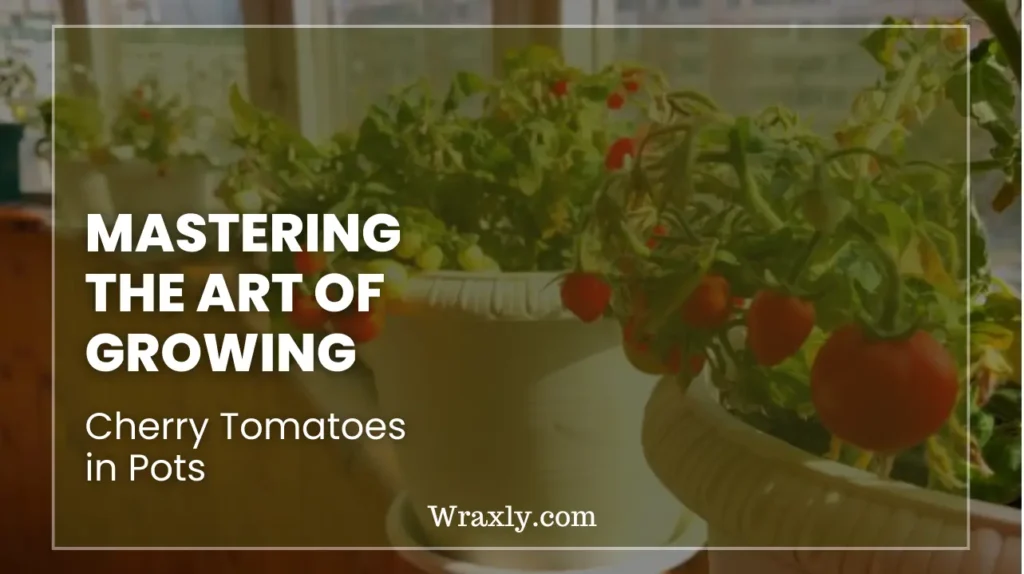
- Cultivo de tomates cherry en macetas: una guía paso a paso
- Paso 1: elija la variedad de tomate cherry adecuada
- Paso 2: seleccione la olla adecuada
- Paso 3: espere el momento adecuado del año
- Paso 4: elige el lugar correcto
- Paso 5: Plantar las semillas/plántulas
- Paso 6: Apoye las plantas
- Step 7: Meet the Plants’ Watering and Fertilizing Needs
- Para leer más
- Paso 8: lidiar con enfermedades y plagas
- Paso 9: cosecha los tomates cherry
- Ultimas palabras
Cultivo de tomates cherry en macetas: una guía paso a paso
Estos son todos los pasos que necesita para cultivar tomates cherry en macetas de forma eficaz.
Paso 1: elija la variedad de tomate cherry adecuada
While it’s possible to grow almost all types of cherry tomatoes in plant pots and bolsas de cultivo de tela, you should consider using the ones that generate high yields. I’ve created a list of the best varieties to choose from.
Asegúrese de comprender las siguientes definiciones antes de leer la tabla.
- Determinado: Estas plantas de tomate cherry alcanzan una determinada altura, tras la cual dejan de crecer. Además, todas las frutas (sí, el tomate es una fruta) en determinadas plantas maduran aproximadamente al mismo tiempo.
- Indeterminado: Por lo general, los tomates indeterminados tienen una temporada de crecimiento más larga y también alcanzan alturas más altas que los determinados. Además, estas plantas siguen produciendo frutos hasta que llegan las primeras heladas.
| Variedad | Altura de planta | Tamaño de la fruta | Gusto | Madura en | Tipo | Colgante |
| Rompecorazones | 20 pulgadas | 1-1,5 pulgadas | Dulce y amargo | 70-84 días | Determinado | Sí |
| Pepita de oro | 24 pulgadas | 1-1,5 pulgadas | Dulce | 65-85 días | Determinado | Sí |
| Micro Tom | 6-8 pulgadas | 0,75-1 pulgadas | Agudo y dulce | 80-90 días | Indeterminado | Sí |
| Golosinas ordenadas | 3-5 pulgadas | 1 pulgada | Dulce | 50-55 días | Determinado | No |
| Dulce millón | 4-6 pulgadas | 1-1,5 pulgadas | Dulce y picante | 50-79 días | Indeterminado | No |
| superdulce 100 | 8-12 pulgadas | 1 pulgada | Muy dulce (un poco ácido) | 65 días | Indeterminado | No |
| pequeño bing | 18-24 pulgadas | 1 pulgada | Dulce suave (sabroso) | 60 a 65 días | Indeterminado | Sí |
| Oro solar | 6-12 pulgadas | 1 pulgada | Rico y azucarado | 65 a 70 días | Determinado | No |
| Terenzo F1 | 16-20 pulgadas | 1,25 pulgadas | Dulce | 56 días | Determinado | Sí |
| pequeño tim | 12 pulgadas | 0,5-0,75 pulgadas | Dulce y agrio | 60 días | Determinado | Sí |
Paso 2: seleccione la olla adecuada
Una vez seleccionada la variedad de tomate cherry que deseas cultivar, el siguiente paso es elige la olla adecuada para tus plantas. El tamaño de la olla Dependerá del tipo de tomate cherry.
If you’re going with a determinate one, you’ll need to opt for a pot at least 15 inches wide. But if you’re planning to grow an indeterminate type, I recommend you opt for a pot with at least 24 inches (2 feet) of width.
In both cases, the pot depth must be at least 12 inches, and it should also be well-drained. It’ll allow you to easily place 3 to 5 gallons of soil in the pot, which is important for cherry tomatoes.
Paso 3: espere el momento adecuado del año
All cherry tomato varieties thrive in sunny and warm climates. They need at least 6 to 8 hours of sunlight daily to grow healthy. Therefore, you’ll need to wait until the soil temperature is around 60 degrees Fahrenheit.
Additionally, 60 to 85 degrees Fahrenheit is the ideal air temperature for these plants. If you plant them when the air temperature is lower than that, they’ll show very slow growth, and their likelihood of falling victim to pests and diseases will also be high.
If the air temperature exceeds 85 degrees Fahrenheit, the fruits won’t ripen or drop from the flowers. Therefore, you want to ensure you choose the correct time to maximize the yields.
Paso 4: elige el lugar correcto
Como se mencionó en el punto anterior, los tomates cherry prosperan con el calor. Por lo tanto, elige un lugar para tus macetas que reciba al menos 6 horas de luz solar al día. Si bien 8 horas son ideales, 6 horas también pueden funcionar si sigues estrictamente las pautas de temperatura proporcionadas anteriormente.
Paso 5: Plantar las semillas/plántulas
Once everything is ready, you can start planting the seeds or seedlings (as desired). You can buy any of these options from a local nursery or garden center. But make sure you fill your pots with high-quality organic soil which doesn’t contain synthetic fertilizers.
Tierra para macetas recomendada para tomates cherry
| Imagen | Título | Principal | Comprar |
|---|---|---|---|
 Arriba
Arriba
Arriba | Mezcla para macetas Miracle-Gro 2 cu. pie | PrincipalElegible | Consultar precio en Amazon |
 Arriba
Arriba
Arriba | Burpee Premium Organic Potting Mix, 9 cuartos | PrincipalElegible | Consultar precio en Amazon |
Arriba Arriba
Arriba
Arriba | FoxFarm Ocean Forest Potting Soil Mix interior exterior para jardín y plantas | Fertilizante para plantas | 12 cuartos + THCity Stake | PrincipalElegible | Consultar precio en Amazon |
 | Mezcla de tierra orgánica para macetas Espoma, mezcla natural para macetas para contenedores de interior y exterior para jardinería orgánica, 8 qt, paquete de 1 | PrincipalElegible | Consultar precio en Amazon |
 | Miracle-Gro Indoor Potting Mix 6 qt., cultiva hermosas plantas de interior | PrincipalElegible | Consultar precio en Amazon |
 | Tierra para macetas de plantas de interior y plantas tropicales, tierra para macetas para todo tipo de plantas de interior, tierra para macetas de plantas de casa, 8 cuartos de galón | PrincipalElegible | Consultar precio en Amazon |
 | Espoma 16 qt. Mezcla para macetas premium de inicio de semillas orgánicas (2) | Principal | Consultar precio en Amazon |
 | Mezcla para macetas a base de compost Fort Vee, 18 libras, mezcla para macetas potenciada con nutrientes orgánicos | Principal | Consultar precio en Amazon |
If you go with seeds, make sure that you plant them in trays and keep them indoors for about six weeks before transferring them to pots. It’ll turn them into seedlings that you can plant in your pots.
While many gardeners suggest that you should plant the seedlings into a small pot (3–5-inch diameter) for some time before transferring them to the final planter, it’s not necessary. You can add them directly to the big pot if all the steps discussed so far are followed properly.
Semillas de tomate cherry recomendadas
| Imagen | Título | Principal | Comprar |
|---|---|---|---|
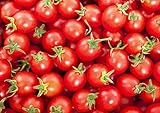 | 30+ Sweetie Cherry, también conocido como Sugar Sweetie Tomato Seeds, Heirloom Non-GMO, Extra Sweet, Heavy-Yield, Indeterminate, Open-Polinated, Delicious, de EE. UU. | PrincipalElegible | Consultar precio en Amazon |
Arriba | Sunsugar Hybrid - Semillas de tomate | PrincipalElegible | Consultar precio en Amazon |
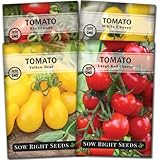 | Sow Right Seeds - Colección de semillas de tomate de cereza para plantar - Cereza roja grande, pera amarilla, blanca y tomates de cereza Rio Grande - Variedades de reliquia sin OGM para plantar y cultivar huertos caseros | PrincipalElegible | Consultar precio en Amazon |
 | Semillas pequeñas de tomate cherry rojo, 500 semillas de reliquia por paquete, (semillas de jardín de Isla), semillas no modificadas genéticamente, nombre botánico: Solanum lycopersicum | PrincipalElegible | Consultar precio en Amazon |
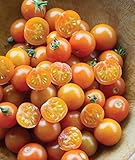 | Burpee Sun Gold Hybrid Non-GMO Home Garden | Tomates cherry de naranja dulce | Mejor plantación de vegetales, 30 semillas | PrincipalElegible | Consultar precio en Amazon |
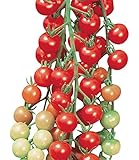 | Burpee Super Sweet 100' tomate cherry híbrido, 50 semillas | PrincipalElegible | Consultar precio en Amazon |
 | Más de 500 semillas de tomate cherry negro para plantar | PrincipalElegible | Consultar precio en Amazon |
 | 50 semillas de tomate Tiny Tim - tomate de patio, reliquia enana, tomate de cereza - por RDR Seeds | PrincipalElegible | Consultar precio en Amazon |
Para plantar sus plántulas en la maceta, siga los siguientes pasos:
- Presione suavemente con los dedos en la tierra para crear un pequeño hueco/depresión.
- Asegúrese de que la depresión sea lo suficientemente espaciosa como para que quepan fácilmente las plántulas y la tierra circundante.
- Coloque la plántula en la depresión asegurándose de que sus raíces estén bien centradas y extendidas.
- Cubra las raíces con la tierra circundante y presione ligeramente hacia abajo (si es necesario) para garantizar la estabilidad.
Paso 6: Apoye las plantas
Once the plant is in the pot, it’ll start to grow, and you’ll need to ensure that you provide it with everything it needs to thrive and remain healthy.
La mayoría de los tomates cherry crecen en racimos grandes, lo que pesa la planta. No sólo sobrecargará las ramas, sino que también puede estresar a toda la planta. La forma más sencilla de solucionar este problema es replantear las plantas con postes de bambú o de madera.
Additionally, you can also buy a cage from a local nursery for the same purpose. You’ll only need to insert the cage into your planter, and the plants will start using this support automatically as they grow.
Soportes de tomate recomendados
| Imagen | Título | Principal | Comprar |
|---|---|---|---|
Arriba | Esbaybulbs Jaulas de soporte para plantas, estaca para tomates, 1,2 m, enrejado de jardín multifunción para plantas trepadoras, enredaderas, flores, verduras y plantas en macetas, paquete de 2 | PrincipalElegible | Consultar precio en Amazon |
 | Paquete de 4 jaulas de tomate de soporte para plantas de jardín, enrejado mejorado de 24 pulgadas para plantas trepadoras, kits de enrejado de plantas con 4 picos de autorriego y 20 clips para plantas (24 pulgadas) | PrincipalElegible | Consultar precio en Amazon |
 | Hydrofarm GCTR Sistema de cultivo de plantación de jardín de tomate de 10 galones con ruedas de enrejado de 4 pies para enredaderas trepadoras y flores en interiores y exteriores, torre de árbol, verde | PrincipalElegible | Consultar precio en Amazon |
 | Jaulas de tomate para jardín, 2 paquetes de 48 pulgadas de soporte para plantas enrejado de tomate para plantas trepadoras al aire libre interior y macetas con 18 estacas retráctiles de acero para plantas, 6 anillos ajustables en forma | PrincipalElegible | Consultar precio en Amazon |
Step 7: Meet the Plants’ Watering and Fertilizing Needs
One of the trickiest parts of growing cherry tomatoes in pots is meeting their watering needs. That’s because they’ll receive a lot of sunlight during the day, which can dry them out pretty quickly.
Therefore, you’ll need to make sure that you inspect your plants frequently. It’ll allow you to water the plants whenever needed and prevent them from drying out.
But it’s important not to overwater your cherry tomato plants, as it’ll make them weak and affect the yield. Your goal is to keep the soil evenly moist, and it can be achieved by watering your plants once a day.
Sistemas de riego de tomate recomendados
| Imagen | Título | Principal | Comprar |
|---|---|---|---|
 | Sistema de riego de jardín Flantor, equipo de riego por goteo de tubería de 1/4 "Juego de equipo de riego automático | PrincipalElegible | Consultar precio en Amazon |
Arriba | Rain Bird SWDMSPKIT Colector de riego por goteo para puntos de riego en un kit de pinchos, burbujeadores y emisores | PrincipalElegible | Consultar precio en Amazon |
 | Sistema de riego automático con temporizador de ciclo de riego de 30 días | PrincipalElegible | Consultar precio en Amazon |
 | Orbit 57946 B-hyve Smart 6-Zone Controlador de aspersor interior/exterior, compatible con Alexa, 6 estaciones | PrincipalElegible | Consultar precio en Amazon |
 | Raindrip R560DP Kit de riego automático para contenedores y cestas colgantes, Riegue hasta 20 plantas con este kit, Negro | PrincipalElegible | Consultar precio en Amazon |
Other than that, you’ll also need to fertilize the plants so that you can have a large harvest. I recommend you go with 20-20-20 water-soluble fertilizer. It means it should contain 20% of each nutrient, including potassium, phosphorus, and nitrogen.
Paso 8: lidiar con enfermedades y plagas
Al igual que los tomates grandes, estas plantas también son susceptibles a algunas enfermedades y plagas. Los más comunes incluyen virus, plagas, marchitez y gusanos córneos.
Consider using non-toxic, biodegradable, and soap-based insecticides to keep pests at bay. Whereas you’ll need to follow prevention techniques to protect your plants from diseases.
Here’s a list of tips that you can follow.
- Coloca tus plantas con suficiente espacio entre ellos para promover una buena circulación del aire, lo que puede ayudar a reducir la propagación de enfermedades.
- Riega las plantas en la base para mantener las hojas secas, ya que el follaje húmedo puede favorecer el desarrollo de enfermedades.
- Aplicar una capa de mantillo organico alrededor de la base de las plantas para evitar que los patógenos transmitidos por el suelo salpiquen las hojas durante la lluvia.
- Inspeccione sus plantas con regularidad para detectar signos de enfermedad y retire y deseche las hojas afectadas para evitar una mayor propagación.
- Las plagas pueden debilitar las plantas y hacerlas más susceptibles a las enfermedades, así que esté atento y actúe si se detectan plagas. Ver también: Cómo utilizar aceite de neem en plantas de tomate
- Limpie y desinfecte las herramientas de jardinería entre usos para evitar transmitir enfermedades de una planta a otra.
- podar las plantas de vez en cuando para promover una buena circulación de aire y reducir el hacinamiento. Puede ayudarle a mantener a raya las enfermedades y también a aumentar el rendimiento.
- Mantenga la salud del suelo mediante una fertilización y enmienda adecuadas, que pueden mejorar la resistencia natural de la planta a las enfermedades.
Fertilizantes recomendados para tomates
| Imagen | Título | Principal | Comprar |
|---|---|---|---|
 Arriba
 | Fertilizante orgánico en tono tomate - PARA TODOS SUS TOMATES, bolsa de 4 lb. | PrincipalElegible | Consultar precio en Amazon |
Arriba Arriba
 | Dr. Earth Organic 5 Bolsa de polietileno para fertilizantes de tomate, vegetales y hierbas | PrincipalElegible | Consultar precio en Amazon |
 Arriba
 | Fertilizante de tomate y verduras Neptune's Harvest 2-4-2, 36 oz | PrincipalElegible | Consultar precio en Amazon |
 Arriba
 | Ludicrous Nutrients Big Ass Tomatoes Premium Gardening Fertilizer Nutrients Indoor o Outdoor Works with All Vegetables, Plants (1.5 lbs) | PrincipalElegible | Consultar precio en Amazon |
 Arriba
 | ¡Tomate Espoma! Alimento líquido para plantas, alimento natural y orgánico para tomates y vegetales, 18 fl oz, paquete de 2 | PrincipalElegible | Consultar precio en Amazon |
 Arriba
 | El fertilizante de tomate de EZ-gro es un fertilizante con alto contenido de potasio para sus plantas de tomate | Alimento vegetal de tomate probado en campo para verduras | Un fertilizante líquido concentrado para plantas de tomate | 1 cuarto | PrincipalElegible | Consultar precio en Amazon |
Paso 9: cosecha los tomates cherry
Once your cherry tomatoes have become shiny and their color has turned deep (it takes around 60 days for most varieties), it’s time to harvest them. You can also determine if the fruits are ready by touching them.
Si se sienten algo tiernos al tacto, puedes retirarlos de las plantas.
Asegúrate de retirar los tomates con un tirón suave en lugar de torcerlos porque puede causar daño.
Nota IMPORTANTE: If you fail to harvest your cherry tomatoes in time, they’ll split open.
Ultimas palabras
Cultivar plantas de tomate cherry en macetas puede ser una experiencia divertida y gratificante. Puede proporcionarle una buena cosecha de tomates que podrá utilizar durante todo el verano.
But it’s important to make sure that you follow the steps discussed in this guide carefully to keep your plants healthy and achieve desired results.
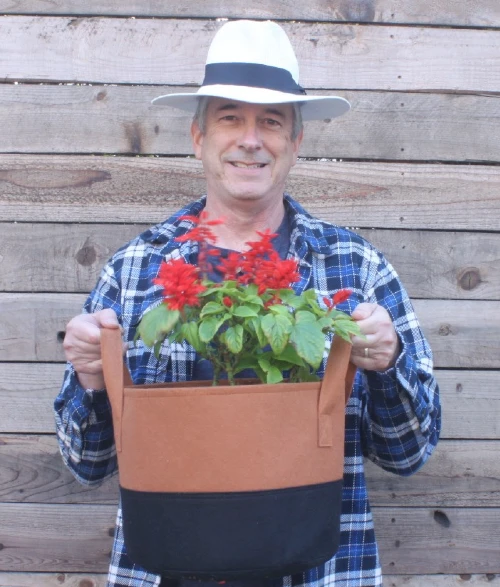
Darrell tiene una pasión por la jardinería que heredó de su padre. Ir aquí para leer más sobre la influencia que tuvo su padre en su amor por la jardinería. Si desea enviar un mensaje rápido a Darrell, visite su página de contacto aquí.
![How to Water Indoor Plants [Plant Care 101]](https://wraxly.com/wp-content/uploads/2021/03/How-to-Water-Indoor-Plants-Plant-Care-101-1200-1024x576.webp)
![Growing Plants from Cuttings [A Simple Guide]](https://wraxly.com/wp-content/uploads/2021/03/Growing-Plants-from-Cuttings-A-Simple-Guide-1200-1024x576.webp)