
Lately, you’ve been seeing a lot of bugs doing a considerable amount of damage to your garden that you’ve grown with your hard work. The cold weather is also approaching, and you’re worried about how you should protect your plants from the cold.
A lot of people use garbage bags to cover their plants in many instances, which makes you think, “Can I cover plants with garbage bags? Will it be safe? Can it damage my plants in any way? What should I do?”
Lo tenemos cubierto con este artículo, donde discutimos si puede usar bolsas de basura, cómo debe usarlas y en qué situaciones.
- ¿Puedes usar bolsas de basura para cubrir tus plantas?
- ¿Cómo debe cubrir sus plantas con bolsas de basura?
- ¿Está bien usar bolsas de basura negras?
- ¿Cuándo debe cubrir sus plantas?
- ¿Las plantas se congelan?
- ¿Qué puede llevar a que las plantas se congelen?
- ¿Debería cubrir sus plantas con bolsas de basura para las heladas?
- ¿Qué plantas debe cubrir primero?
- ¿Debería regar y fertilizar sus plantas antes de cubrirlas?
- ¿Por qué no debería cubrir sus plantas con bolsas de basura durante demasiado tiempo?
- Resumiendo
¿Puedes usar bolsas de basura para cubrir tus plantas?
Usually, covering plants with any plastic material isn’t safe. However, you can cover your plants with garbage bags to protect them from plagas y enfermedades transmitidas por plagas y, a veces, exceso de humedad por demasiada lluvia.
Las cubiertas de plástico, incluidas las bolsas de basura, crean algo similar a un terrario, que contiene la temperatura, la humedad y los nutrientes y los recicla constantemente.
However, most plastics are known to conduct cold temperatures, which can damage the delicate tissues of the leaves. Besides, there are dos and don’ts that you need to follow when covering plants with anything.
Most garbage bags are made of polyethylene, which is a good insulator. You can use them to protect your plants as long as you’re following the necessary steps. Garbage bags can, in turn, act as an insulating cover if there’s another layer of insulation between the bag and the plant.
Let’s learn more about it in the next segment.
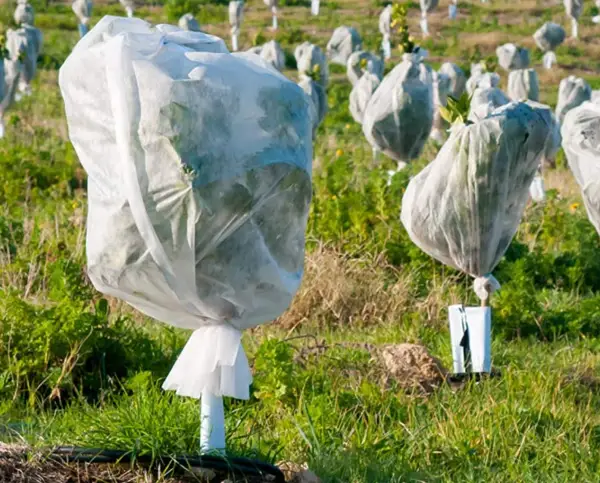
¿Cómo debe cubrir sus plantas con bolsas de basura?
When it comes to covering plants, there are a number of things that you need to follow. These will ensure that you protect your plants from the damaging external environment properly and don’t end up withering your plants while trying to save them.
| Cosas a evitar | Cosas para hacer |
|---|---|
| If you want to insulate your plants from the cold, don’t use only garbage bags to cover them if they’re not made from polyethylene. | Use una capa de manta, toallas, cartón o cualquier tela aislante entre la planta y la bolsa de basura. |
| Don’t wrap the garbage bag very tightly where it’s touching the leaves. The plant won’t have much space to breathe, and it may end up damaging the leaves. | Además de tener una capa de aislamiento en el medio, también debe hacer un marco de soporte y cubrirlo con una malla. Esto mantendrá la capa protectora en su lugar. También permitirá que tus plantas respiren adecuadamente. |
| Don’t cover only the parts of the plants with leaves, flowers, and fruits. Also, don’t wrap the plants around the trunk. | Protect your plants by covering them entirely from the tip to the roots. It’ll help to protect them from harsh winds. If you’re protecting your plant from cold, you should concentrate on insulating the roots properly. Cold air is denser than warm air, which is why it’ll sink to the ground, keeping the temperature toward the root much colder. If the roots get frozen, you can’t recover the plants anymore, and they will die eventually. If you want proper insulation and protection from insects and diseases, build a capsule or a tent-like structure around your plants with garbage bags and seal it to the ground properly. |
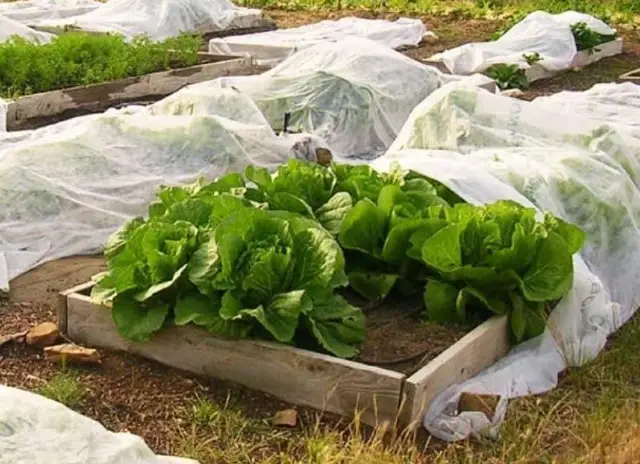
| Don’t keep your plants covered for the entire time. Otherwise, too much moisture will get trapped, which can have an adverse result. | In cold weather, cover your plants up entirely at night, as temperatures fall a lot in those hours. During the day, if the sun shines and you can see the temperature is in the safe zone, take the covers off. This will help excess moisture to escape, and your plants will photosynthesize properly. However, it’s best to keep the roots partially covered, as cold air settles at the bottom and can harm the roots. If you’re covering your plants to protect them from insects, then keep them covered with a fine mesh during the day. Pests hide in the shade during the day and attack the plants at night. |
| If you want to provide a heat source during freezing temperatures and protect your plants from insects at the same time, don’t use Luces led para dar calor extra a tus plantas. | When temperatures get so cold that covers aren’t enough to protect your plants, surround them with old-school incandescent bulbs. Incandescent bulbs are a great source of artificial heat. Putting a few of these bulbs around the capsules or tents will ensure that your plants get enough warmth and won’t develop frostbite. However, these can also attract insects, so the garbage bags can add protection against these pests. |
| If you’re covering potted plants, don’t keep them in a cool corner or in shade. | Encuentre un lugar cálido y soleado para sus plantas en maceta donde puedan permanecer cubiertas durante unos días. Esto les ayudará a mantener un ecosistema. |
¿Está bien usar bolsas de basura negras?
It’s better not to use black garbage bags to cover your plants. They will block sunlight and any other source of external warmth that you’ll provide and may make their internal environment colder.
You should use a cover transparent enough to allow light to shine through. That way, even if the temperatures are freezing during the day and you need to keep your plants covered, they’ll be getting light and warmth.
¿Cuándo debe cubrir sus plantas?
Aunque las plagas siempre están ahí para atacar sus plantas, son peores en algunas temporadas que en otras, lo que provoca infecciones que finalmente pueden matar las plantas. Debes cubrir tus plantas con bolsas de basura en esas estaciones todo el tiempo.
If you’re covering your plants to protect them from frost, do it as soon as the temperature gets below 40 degrees F. As the temperature starts lowering from this point, they can suffer from frostbite.
En ambos casos, debes cubrir tus plantas cuando oscurezca. Las temperaturas bajan drásticamente por la noche, y si usa luces como fuente de calor, los insectos definitivamente atacarán sus plantas.
Otras opciones de cubierta vegetal de Amazon
| Imagen | Título | Principal | Comprar |
|---|---|---|---|
 Arriba
 | Valibe - Cubiertas para plantas con protección contra congelación, 10 pies x 30 pies, cubierta flotante para hileras, tela de jardín, cubierta para plantas para protección contra heladas de invierno, protección contra plagas solares (10 pies x 30 pies) | PrincipalElegible | Consultar mi precio en Amazon |
 Arriba
 | Evoio Paquete de 4 bolsas de protección para plantas de jardín, frutas, arbustos de arándanos, bolsas con cordón, cubierta protectora de tomate de 3,5 pies x 2,3 pies, bolsas de barrera para plantas de jardín para verduras y frutas | PrincipalElegible | Consultar mi precio en Amazon |
 Arriba
 | Blue_Stone Cubiertas para plantas Bolsa de protección contra heladas Chaqueta para plantas reutilizable de invierno con 3 estilos, paquete de 3 de 23 x 31 pulgadas, 2 paquetes de 39 x 39 pulgadas, 1 paquete de 70 x 63 pulgadas (2 piezas de 39 x 39 pulgadas) | PrincipalElegible | Consultar mi precio en Amazon |
 Arriba
 | SUNPRO Cubiertas para plantas protección contra congelación, cubierta de fila flotante reutilizable de 10 pies x 30 pies, mantas para plantas de protección contra congelación para climas fríos (aros de soporte no incluidos) | PrincipalElegible | Consultar mi precio en Amazon |
 Arriba
 | Plant Covers Freeze Protection 5 Pack – 35" × 50" Reusable Plant Protector Bag with Drawstring and Zipper for Plants Trees Shrub, Frost Jacket Warm Blanket for Frost Protection Season Extension | PrincipalElegible | Consultar mi precio en Amazon |
 Arriba
 | Nuvue Products 22250 Cubierta de invierno para nieve y hielo, 22 x 22 x 22 pulgadas, paquete de 2, verde | PrincipalElegible | Consultar mi precio en Amazon |
 Arriba
 | FOKEP Cubiertas para plantas de 10 pies x 30 pies protección contra congelación, cubierta reutilizable para plantas para invierno, cubierta de tela flotante para verduras, protección contra insectos, protector solar, extensión de temporada | PrincipalElegible | Consultar mi precio en Amazon |
 Arriba
 | 2 Pack Plant Cover Freeze Protection 47.24"×70.87", 2.1oz Upgraded Thickness Plant Freeze Protection Cover with Drawstring for Frost Protection, Winter Plant Frost Cover Jacket for Plants Trees Shrub | PrincipalElegible | Consultar mi precio en Amazon |
¿Las plantas se congelan?
Yes. Just like humans, plants can get frostbite. However, it doesn’t look like what we get.
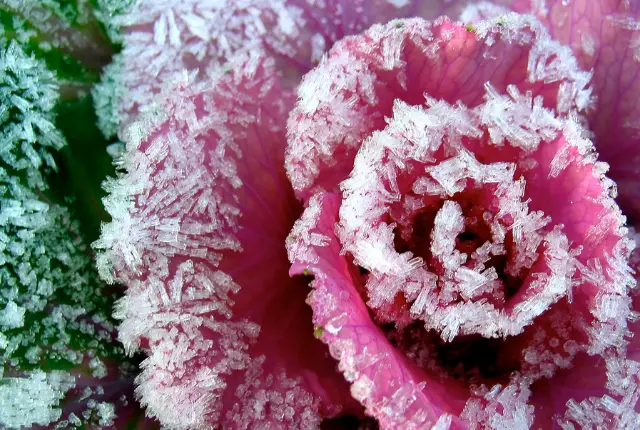
Al igual que nosotros, las plantas llevan agua dentro de sus células. Pero a diferencia de nosotros, donde nos congelamos debido a los vasos sanguíneos encogidos y dañados, las plantas se congelan cuando el agua en sus células se congela y se expande.
A veces, esta expansión puede ser más de lo que las células pueden tolerar y explotan. Esto hace que los tejidos de la planta, especialmente las hojas y las ramas tiernas, se marchiten y se marchiten.
¿Qué puede llevar a que las plantas se congelen?
Cold weather can give plants frostbite if you don’t cover them up in time. They need warmth and sunlight during the day. However, if the temperature gets close to freezing, frost can develop in the plant tissues, which can ultimately damage them.
Sometimes, the location of your plants can also lead to frostbite. Windows and metal surfaces that are exposed to the external environment get very cold to the touch. If you keep your plants in these places, they’ll get frostbite and wither away.
¿Debería cubrir sus plantas con bolsas de basura para las heladas?
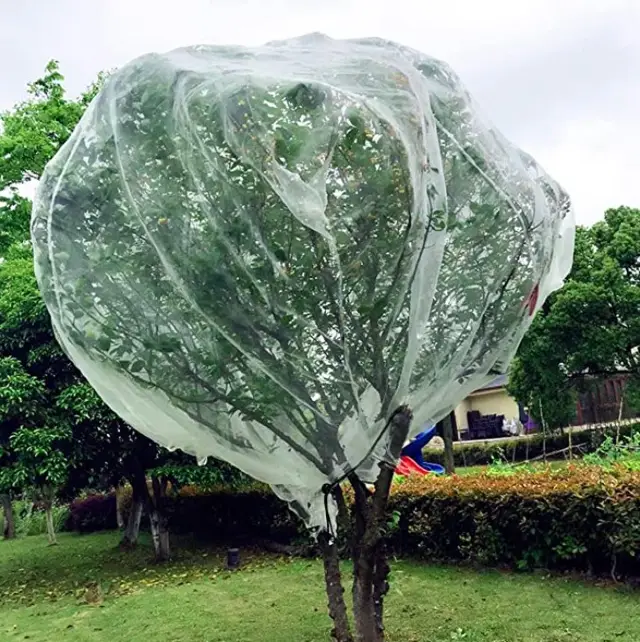
As mentioned earlier, most garbage bags are made of polyethylene, which is an excellent insulator. Covering your plants with garbage bags is okay as long as the cover goes to the root and doesn’t suffocate the plants.
Las tiendas de campaña o las cápsulas hechas con bolsas de basura imitarán muy bien el entorno de un invernadero. Retendrán la humedad y el calor de los árboles y los reciclarán constantemente. Esto asegurará el mantenimiento constante de su entorno interno.
Besides, it’ll help your plants to get the nutrients they need. The cover will also protect them from harsh wind or external conditions.
¿Qué plantas debe cubrir primero?
Ya sea para protegerse contra insectos e infecciones, o para protegerse contra el frío helado, primero debe cubrir las plantas más jóvenes y tiernas. Las plagas se sienten atraídas por estas plantas debido a sus tejidos tiernos, y el clima frío también les hace mucho daño.
También debe cubrir la plants that you can’t bring indoors, even if they’re quite small. And if the plants have flowers and fruits, then it’s essential that you cover them with a garbage bag. Otherwise, all of them will soon be insect-infested.
Si usted tiene pequeñas plantas en macetas outside that you can bring inside easily, then take them in and keep them in a warm spot with an ample amount of sunlight. However, don’t keep them near windows if the temperature outside is freezing.
También debe cubrir plantas suculentas, especially cacti, so that they don’t get frostbite. suculentas son almacenes de grandes cantidades de agua, lo que los hace susceptibles a daños.
¿Debería regar y fertilizar sus plantas antes de cubrirlas?
If you’re covering your plants during heavy rain, then you don’t need to water and fertilize them. The el suelo recibe mucha humedad que las plantas puedan absorber fácilmente. Y si usa fertilizante, todo se lavará, dejando muy poco para que sus plantas lo absorban.
Remember to fertilize your plants a few days before it rains so that it has time to work their way to the roots. Also, you don’t need to fertilize your plants every day, but you should water them before putting them under a cover.
It’s best to avoid adding any fertilizer after early fall. This will stop any new foliage from growing. Older leaves are tougher and more resilient to cold and frostbite.
It’s a good idea to water your plants before nightfall and cover them up at dusk. It’ll help to prevent them from frosting by regulating the temperature.
¿Por qué no debería cubrir sus plantas con bolsas de basura durante demasiado tiempo?
When covering your plants with something impermeable like plastic garbage bags, you shouldn’t keep them covered for too long.
Lack of air circulation won’t allow your plants to evaporate the excess moisture properly. Although the closed environment creates an ecosystem where the moisture, air, and waste get recycled, excess of these will create a fungal infection in your plants, leading to rotting.
Also, as there isn’t any air circulation, your plants will overheat from the excess heat of evaporation, which will worsen the rotting and withering of the plants.
La falta de luz solar directa también ralentizará el proceso de fotosíntesis, lo que significa que sus plantas tendrán menos alimento, lo que en última instancia provocará deficiencias.
Resumiendo
Las bolsas de basura pueden proteger tus plantas o dañarlas, dependiendo de cómo las uses. Se pueden usar para proteger sus plantas de factores externos como heladas, fuertes lluvias, vientos extremos, plagas e infecciones. Sin embargo, evite las bolsas de basura negras.
With proper research, thorough maintenance, and mindfully taking necessary precautions, you’ll be able to insulate and protect your plants successfully using garbage bags.
Darrell tiene una pasión por la jardinería que heredó de su padre. Ir aquí para leer más sobre la influencia que tuvo su padre en su amor por la jardinería. Si desea enviar un mensaje rápido a Darrell, visite su página de contacto aquí.
![Container gardening for beginners [Buying guide]](https://wraxly.com/wp-content/uploads/2021/02/Container-gardening-for-beginners-Buying-guide-1200-1024x576.webp)